“I haven’t got a clue…”

For far too many years, I would have put my hand up, arm straight, “I know! I know!” Whatever the subject. I always knew. I was always right; you were always wrong and I got a kick out of making sure you knew that I was right and you were wrong.

How come? Well, when it came to matters of faith and religion, I was brought up in an environment where everything was always about being right or wrong. The dissection and roasting of the sermon of the day, to be consumed over lunch was a weekly occurrence. No wonder I was the know-it-all!

You can check with my family; I know they will be honest, but I think it is so much more common to hear me say, “I haven’t got a clue.” Why? Because on most things and most of the time, I don’t have the vaguest idea what I’m talking about. Especially when it comes to the actions of other people and the motives behind those actions. How could I possibly know?

I’m getting older – not old! – and, on a good day, I find the whole judging and criticising of others quite distasteful. On a bad day? Well, likely you will have been on the receiving end of the bile that spills out of my mouth far too easily.

I like what James Baldwin said, because I like the word “Mystery,” because it shatters the illusion of certainty, and increases the possibility of The Great Adventure. Mystery evades those who know it all, while certainty pretends that you do know it all, when you don’t. So, when today is a good day, I like not knowing; I enjoy “growing with the mystery as the mystery grows in me,” whatever the subject. I want to explore and discover and then figure out ways to tell stories that begin the unveiling of said mystery.

And I am sure that when I knew everything about everything, I was lost, terribly lost, and a very unpleasant person to be around.

# Keep safe. Be kind. Enjoy

‘I just want to go home.”

“I just want to go home! Why can’t I go home to glory?” A conversation was had between my youngest brother and the doctors. “We think it is time to put Sid onto palliative care.”

“Why won’t the Lord take me to glory?” “Dad, sssh. Listen.” Eventually he did. “The doctors are going to put you on palliative care. You will be going to glory soon, but it might take a couple of days.”

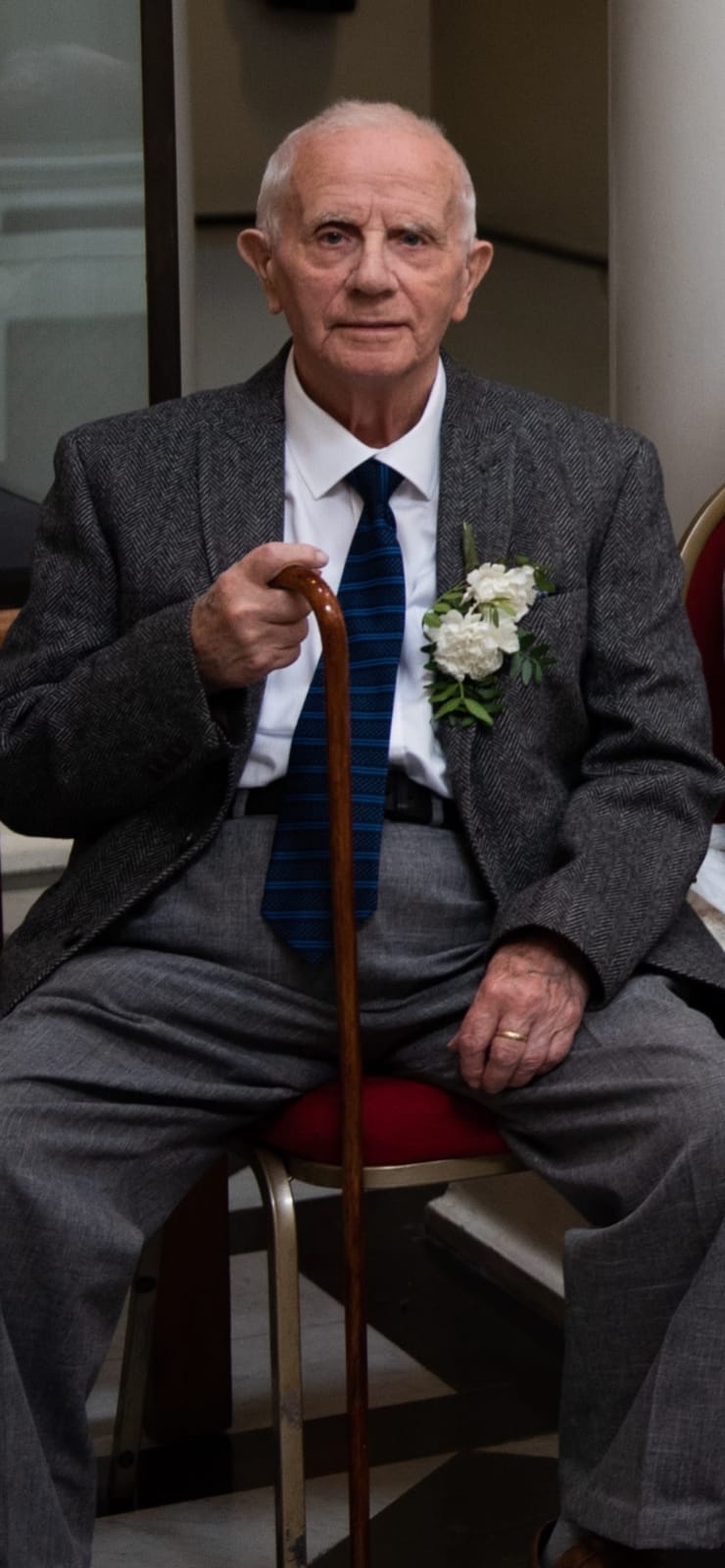
“Really? Praise the Lord! Amen!” On Tuesday, June 20, 2023, Dad finally got his wish, slipping away peacefully to the God who he loved so much. He was eighty eight years old.

As my brother repeated that story to me this morning, tears welled up again. Who was this man, that is my Dad?

In the week prior to Dad’s passage home, and in the weeks between that Tuesday, and our Celebration of his Life on Friday, July 14, I discovered what was always in front of me, but I couldn’t see. But then Dad was not a man for fanfares. Ever.

Grief is always an unwelcome visitor, barging in on the normality of our lives, interfering with our routines, and disrupting our emotions. As I have discovered, what you do with this intruder is not cast in stone. There are no right or wrong ways; just what works for you.

It is more a deep sadness and a profound feeling of being lost that refuses to let go of your heart. And just as you are starting to feel a little more normal (whatever that is), the sadness and loss up the ante and you are back where you started. When that happens, the brightest summer day turns into different shades of grey. Your eyes seem unable to refocus on the reality of the beautiful weather or the happy face that presents itself to you in a variety of ways.

And now I am left contemplating the life of this man that I called Dad. What to say and what not to say? Dad had a hard life and there are many sad and painful memories that etched their wounds into the flesh of his life. In the end, good or bad memories disappeared beneath the fog of dementia that increased the grip on his life as each year passed, shrinking his world until there wasn’t much left. It can been seen in any life that endures the steady march of any form of dementia on the brain of the sufferer. As it does, whatever is left is usually the mundane and the routine that now occupies nearly all of the thoughts and emotions of the sufferer. It is incredibly sad to watch. You know there is not much you can do.

And yet Dad, for the most part, dealt with it as he did most things in his life, with humour, courage and humility; from losing his dad and then his mum before he was an adult, to serving as a Reservist in the Medical Corp in the Malaya conflict. The government of the day, and the government of today, refused and still refuse to call it a war, not wanting to give any credibility to their communist enemies. And yet it was a war. The only memory that has stood the test of time is of a soldier, whose face had been blown off, being held by Dad as he died. A memory never to be forgotten.

In the last few weeks, one thing has become clear, that as children growing up we never noticed. Dad was the epitome of a family man. His own niece observed that once Dad had married and then had a family, he was at his most content. He never desired anything else. He worked hard, sometimes too hard, to provide for his family. And that was all. And as I have reflected since he left us, I realised just how true that was. Dad was impossible to buy for, at Christmas and birthday, because he didn’t want anything. He was happy as a husband and a father. He had all he wanted.

There are some stories, funny and heroic – stories of Dad getting on and doing what needed to be done. There are other stories of long and heated theological and faith discussions with friends, often deep into the night and, at times, in the strangest of places, but never so heated as to damage friendships. The grandchildren can talk for ages about those moments that still make them laugh. And I could go on. Maybe for another time.

My theory is that Dad could only die so well, because he was content with his lot in life. And he was content because of his faith. Now Dad could argue a theological point with the best of them, and could preach up a right old storm. I remember one entitled, “But God…” But his greatest lessons could never be taught by arguments or words, but by his life and his passing.

I miss my Dad terribly. The intensity of my sadness and loss has really caught me out. I have no idea how long it will take me to heal up enough to get back to my “normal.” But whatever my normal is, I want it to be strengthened and empowered by a new willingness to be content, not with stuff, but with people – my family and my friends – and with my own friendship with my God, who is LOVE. For that is the only hope I have of being able to die well.

What a Legacy!

A man who refused to be defined by his disability. Restricted by, for certain, but never defined.

A man who lived his life to the maximum. You might say that his maximum was less than an able bodied man, but you would be hard-pressed to prove it.

A man whose resilience sometimes morphed into stubbornness; whose pride in his appearance, and in his work could have been misunderstood to be OCD.

There were two strands to Allen’s life; multicoloured and vibrant with sound – his family and his work. In both strands, he fought hard to leave a legacy; children and grandchildren who he championed to become the best version of themselves. It worked.

In supporting the work of several charities, he gave disabled people hope and reason to cracking on with their lives. “He saved my life,” was not just a one-off, but a common theme, and you knew they meant it.

A man who loved Manchester United – you suspect his patience with them would have been tested to the limit in the last few weeks! And yet that patience spurred him on to work on the family history, hour after hour. (As I write, his oldest daughter, is sat on her iPad trawling through and organising pages and pages of information, trying to make sense of it all.)

It is exactly a week ago that we said our final “goodbyes,” all one hundred of us – wheelchair users squeezed into every available space, others craning their necks from outside the back door of the chapel. There was humour, sadness, the passing on the baton. For sure, a deep sense of loss, gaping holes deeper than we could have imagined. But the memories, the images, the sounds of this man who had a bigger impact than we could have realised, call us to be who we are, to not be defined by our past or our present limitations.

Allen often referred to our family as “the God-Squad,” always with a smile on his face. He never claimed to have any faith – I wouldn’t blame him either. His hard life constantly chucked boulders of questions and challenges in the road ahead of him. And yet… to those who would see and hear, The Inherent Presence was obvious, tangible and comforting.

“Allen, thank you. Thank you for showing me what courage and resilience look like. Thank you for the wonderful gift of your oldest daughter, who has taken up the baton and is living the legacy. Until…”

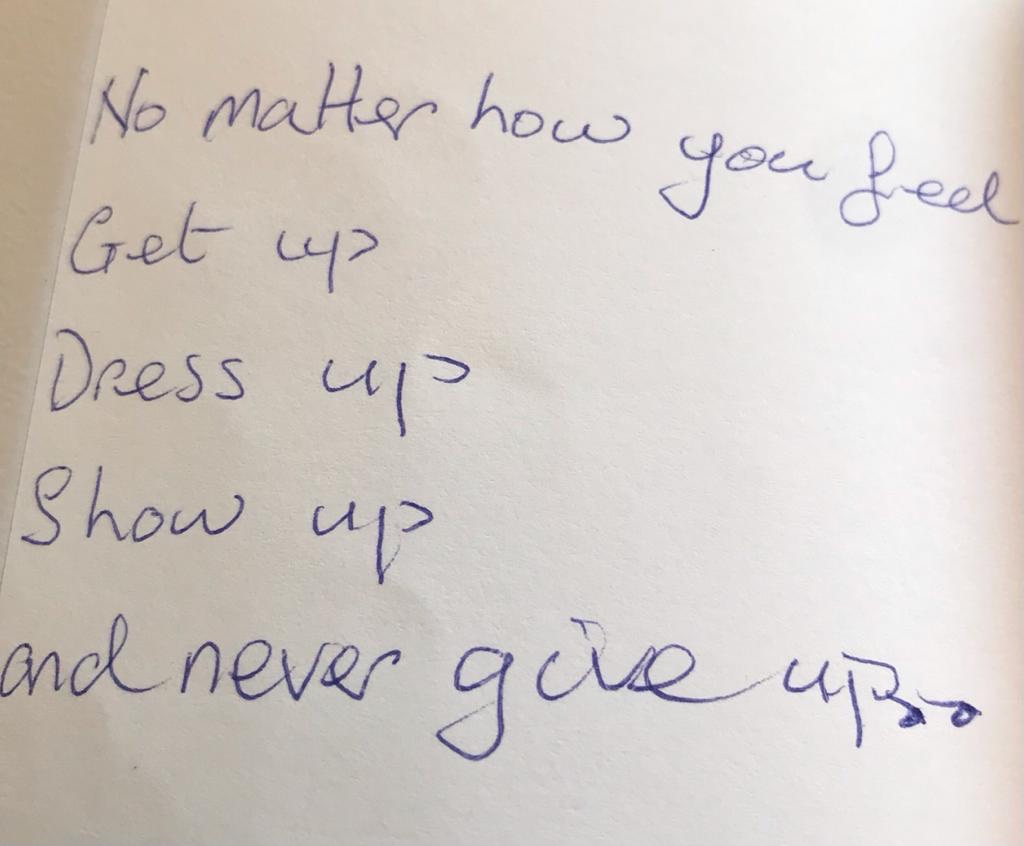
Teresa found this in the front of an exercise book on Allen’s desk. His words. The way he lived his life. The legacy he leaves for those who will take the baton and run with it.

Goodbye, Grandma Betty

The “always there” human North Star of the Compass of my spirituality has gone. Through the door that we call “death,” a horrible word that fails to tell the truth.

With Grandma Betty, Summer 2021

“Goodbye for now. You have filled every day of my sixty-three years with your kindness, with your prayers and with your interest.

I feel very sad and little bit lonely today, but it will pass. And I will press on to the higher calling of my Eternal Star.”

Grandma Betty. Not really my grandma, but absolutely my Grandma.

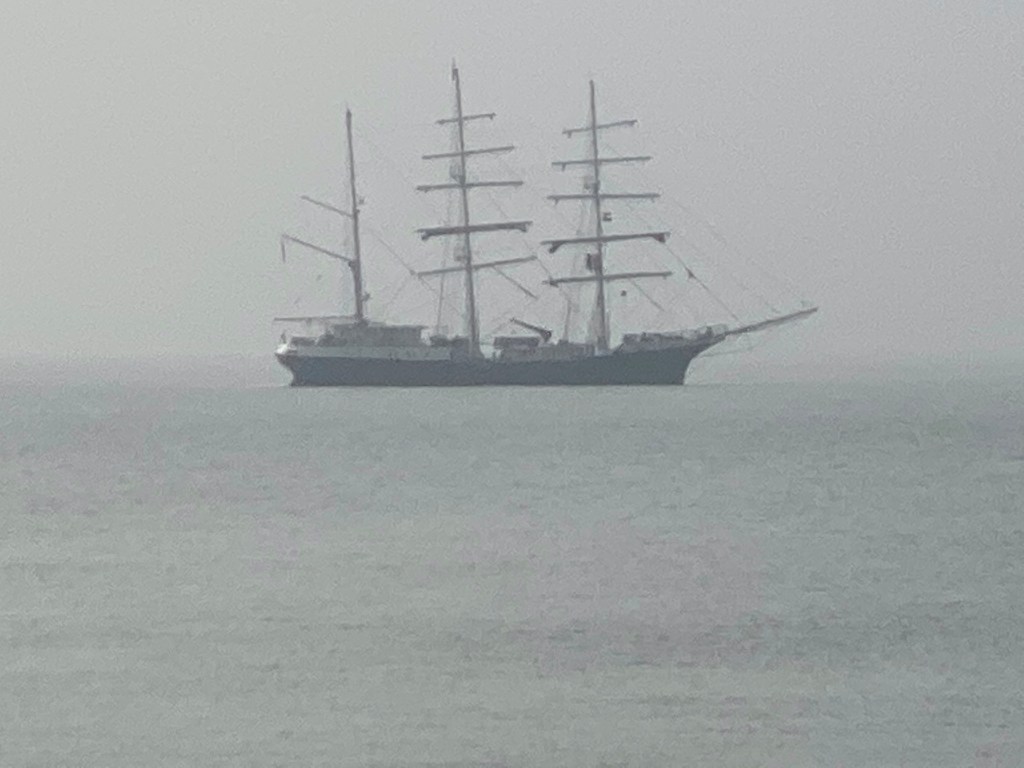
I remember 1963, just about, waving goodbye on London’s dockside, as the ship carrying Betty and Cyril out to Jamaica, slowly but resolutely disappeared onto the horizon. Jamaica, a place blessed by their missionary calling and their kindness for many years.

Whenever they returned for a break, they would come to stay with us, or holidays would be arranged so that they could come with us. The conversation has, repeated itself over and over, throughout the years:

“How is school going?”

“How is college going?”

“How is work going?”

“And how is church for you? Is there a youth group? Etc, etc.”

And then, “How are the children doing at school?”

Conversations that have marked me for life. Not by their intellectual or theological muscle-rippling; not by their holiness or their doctrinal accuracy. But by their kindness and by their interest. I would write to them, on those old airmail letters, waffling on about nothing. And always Grandma Betty would reply. Always.

As I struggle to come to terms with the loss and the sadness, I wonder (prompted by my brother), would we even have become a family if Betty and Cyril had not taken mum and dad under their wings, and loved them with gallons of kindness into some kind of normalcy? I’m not sure.

I stayed in Betty’s home about a month before she left us. She was already in a care home. I was staying there so that I could look after dad, who lives, literally, round the corner, for a few days. It felt weird being in Betty’s home without her being there. I stumbled across some books written by an author who has become such a dear friend to me, helping me to negotiate a deconstruction and then reconstruction of my faith. I was shocked. I thought I knew what kind of books Grandma would read, and these certainly did not fit what I thought her theological leanings were. Shocked and impressed. Even at the end, Grandma was full of surprises.

Postscript: It is a few weeks ago now that some of the family stood, sombre and stoic, some fighting hard to hide the tears that refused to remain behind our grey faces. I had forgotten how heavy coffins are. And how empty of hope and joy the words of a Christian burial are.

We resumed our thoughtfulness at the Thanksgiving Service. It was somewhat weird because it was held at the church I was dedicated at, and where my first Sunday School lessons were heard. Not much had changed. Everything bar the pews were in place as I remembered. And some of the people were still in place. The tributes that were read were full of the Grandma Betty that I will always remember – a woman of persistent kindness and fierce loyalty.

Waiting for me when I return home from holiday is a box of photographs, the precursor to several more boxes. Cyril was an avid photographer – all 11,800 of them. I am sure as I go through, deciding what to be kept and scanned, other memories will flood back. All I want to remember is the character of this short dynamo of a woman, who loved our family into a world of kindness and grace. And for that I will be forever grateful.

The human North Star of the compass of my spirituality:

“Goodbye for now. You have filled every day of my sixty-three years with your kindness, with your prayers and with your interest.

I feel very sad and a little bit lonely today, but it will pass. And I will press on to the higher calling of my Eternal North Star!”

When Everything’s On Fire

Two years ago, mum passed away. And in her passing I discovered a gate that led, out of the garden in my heart, and into a wide panorama of beauty and life. I chose to open the gate and found myself exploring The Great Adventure.

For the first time in my life, I was finally free to think what I wanted, believe what I wanted and live how I wanted. And that, at sixty-one years old! Quickly it became a journey of discovery. For too long, and under the fear of eternal damnation, I was imprisoned in doctrines and beliefs that I was terrified of. I began to explore and question, read and talk over coffee. I soon became clear about what I no longer believed in, but struggled to be certain about what I did believe in. It is a scary place if you have been imprisoned all your life.

Slowly but surely I began to emerge from thick forests of uncertainty. Depression and anxiety came to stay for a while. Love and kindness, from family and friends, helped to make sure that their stay was short.

There have been two or three friends who have walked with me. My Band of Blokes is growing, the walks and the coffee and the conversation have become very real encouragers along the way. And there have been two or three authors, new to me, who have significantly helped me to rethink and reimagine my faith. And Brian Zahnd is one of those.

The timing of this book was perfect. He described what I had been through, given some of it names, and illuminated with force some of the conclusions I had come to. I loved the way he challenged certitude – our attempts to put God in a box and ensure he never leaves it.

But for me, the chapter “House of Love” created a finishing line to my explorations… for now. There are other books waiting to be read, and I am sure I will revisit the writings of Brian Zahnd again. I cannot recommend this book highly enough. I don’t recall ever saying about a book – “This book is filling my heart with joy!” I did this time.

That Persistent Whisper

I had just had a great cup of coffee and a good catch-up with one of my close friends, an honorary member of My Band Of Blokes. I always leave invigorated and thoughtful. And today was no exception.

As I slowly walked (thanks to sciatica) home, I approached a very small car, the size of which will become significant soon. A lady approached the car in a wheelchair. I was going to say she was an older lady, but then realised that she is probably about my age. She wrestled the drivers door open and heaved herself from the chair into the car. I paused. As I was about to walk past the car, the woman pushed the back of the drivers seat back, so that she would be almost lying flat. I realised that she was about to heave the wheelchair over herself and onto the passenger seat. I thought carefully. These situations can be tricky.

“I don’t mean to insult you, but would you like some help?” She smiled. “I’m not insulted, and some days, I appreciate the help, but today, I’m fine, thank you.” I smiled. “Then, in that case, I will continue walking, feeling inspired.” When I mentioned it to my daughter, she told me that the woman goes swimming, heaves herself out of the pool and onto her waiting wheelchair. She swims faster than my daughter, all with upper body strength. I’m impressed.

I had barely crossed the road, when the whisper I have come to know and love, asked a very pointed question: “So, which miracle draws more attention to me (God)? The miracle of supernatural, instantaneous healing? That, quite frankly, is often forgotten within days? Or the miracle of somebody exhibiting supernatural courage and grace as they face the challenges of every moment of every day?”

If there is a correct answer, it is probably, “Both/and.” And please, do not misunderstand me. I am not suggesting for even a second that we shouldn’t be believing in miracles, or even praying for them. I’ve seen enough to know that miracles, whatever shape they come in, give My Great Papa bucketloads of credit, and inspire faith and confidence in him to do it again. But I wonder – that’s all – whether we underestimate the stories of those who are never healed, but exhibit the same faith and confidence in God by their courage and resilience in the face of adversity?

Speaking for myself, I am inspired by those close to me, and those who are strangers, who have no faith or bucketloads of faith, who face their challenges with courage and resilience. And my faith is lifted and injected with new life – yes, with the way they deal with their lives, but also when I see and hear stories of Papa’s supernatural interventions in the lives of others.

It is often not what you are looking at, but what you see and the way you see it.

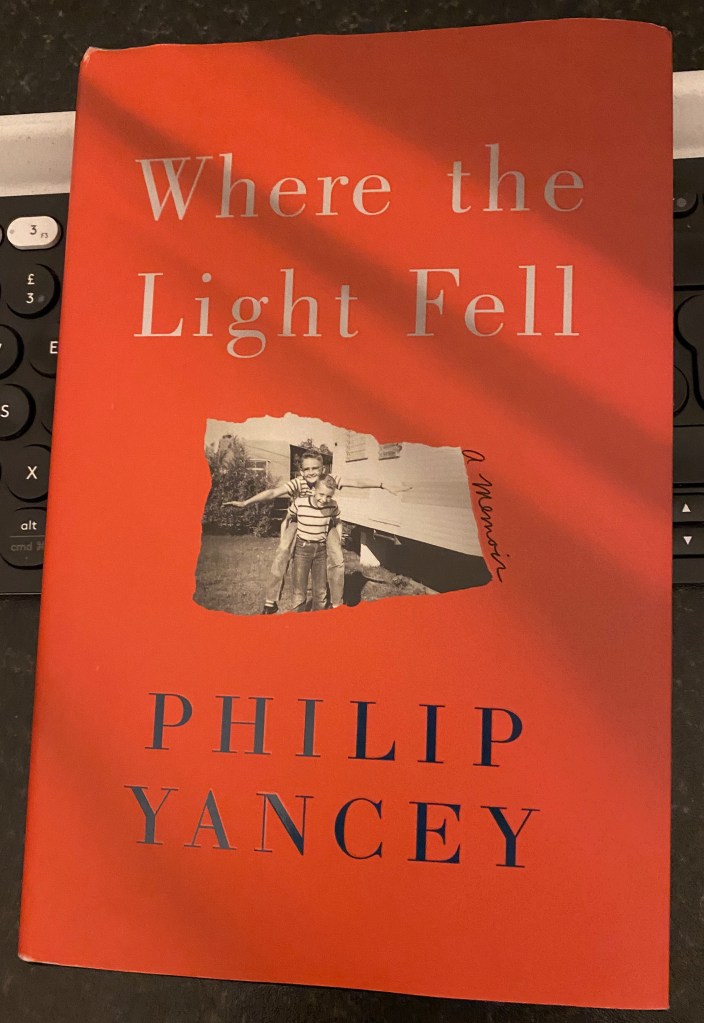
Where the Light Fell

I have always absorbed Philip Yancey’s books. He has never been afraid to ask awkward questions of the church, or of God. The rebel in me kind of likes that.

This is subtitled, “A Memoir” and in his usual way, he shines a light on his own life, and the pain that has been endured by all of his family and many more.

What I didn’t expect was the book to become a mirror and a spotlight onto my own life. In so many ways, our stories are similar, though what he endured at the hands of Church and Bible College leaves my pain in the shadows. And it appears that the soul ties that exist between fundamentalism and Republicanism in the US are more obvious than they are here in the UK. Although… when I was growing up, it was almost insisted on, at least by my parents, that the only party a Christian should vote for is Conservative. Really?

As I read, and looked in the mirror, and allowed the spotlight to shine into the dark shadows of my own life, I saw, in a new way, that I am more free today than I was even a couple of years ago. And if only to ask questions and to allow the answers to send me on an inner journey of adventure and discovery. As you will see in the coming year, my reading material is varied and diverse. And before you blame somebody else, I requested these books for Christmas and Birthday, myself, and with purpose.

I would heartily recommend this book by Philip Yancey. It makes for painful reading, but the story of redemption and grace shines through, even in the darkest moments.

Who would have thought

When you don’t see any startling marks of your own religious condition or your usefulness to God, think of the Baby in the stable and the little Boy in the streets of Nazareth. The very life was there which was to change the whole history of the human race.

And that is a profound thought.

Who would have thought that the baby that yelled his first scream in a dirty old stable could possibly be The Messiah? And who would have thought this same child, learning to walk in the dirt and dust was the Incarnation of YHWH, his Father in heaven? Even more, who would have thought that the teenage boy, getting into teenage mischief and learning how to carve wood, would show me, two thousands year on, what real love actually looked like.

And then there is an even more profound and astounding thought.

Who would have thought that this boy, who endured school as a nightmare due to his stuttering tongue would one day speak in countless churches, and tell stories about his Great Papa?

Who would have thought that this teenager, struggling with social ineptitude, not knowing how to engage with people, would one day become a Papa to so many?

And who would have thought that this man would, for six years, be part of an amazing double act who, together, poured their lives and their love into the broken lives of little ones and watch as the miracle of their healing emerged before his very eyes?

Who would have thought that this man imprisoned for most of his life in theological, doctrinal and moral cages would emerge one day into a place of adventure and discovery, and into the freedom of what it actually means to be loved, unconditionally, as he is and not as he should be by a God who, whatever else he is, is the God who is LOVE.

Who would have thought?

So that, today, he is basking in one of the greatest compliments ever given to him: “I like you because you are a self-confessed wonky saint!” (Thank you, Steve!)

Wishing all my readers a very Happy Christmas

Goodbye Joan

On Wednesday, October 6, 2021, family and friends gathered to say goodbye to my Aunt. The Tuesday and Wednesday left me reeling in astonishment and wonder.

I stayed with dad. Always a risk. Dad is eighty-six, his world shrunken by dementia and Covid-19. He didn’t understand why I had travelled for the funeral. I tried to explain. He grunted, but I wasn’t sure if that was out of reluctant approval, or I still don’t get it. To me, it didn’t matter and dad has probably already forgotten.

We had circular conversations, that still carried on when I phoned him this morning. The tragedy of dementia. And yet there were moments of memories as sharp as if they were yesterday rather than eighty years ago. And optimism for the future; yes, at eighty-six. He remembered that at three-years-old, he was in hospital with a chest infection, and how his mum came to the hospital to tell him that there had been an accident and his dad had died; and the length of their garden.

And then that moment when he owned up, with very sad eyes, to missing mum, so much. And wondering whether he will recognise her when he leaves this life. “I would really love to see Heather…” And then his eyes lit up, sparkling with hope and expectation; a big smile spread across his whole face. “… But I can’t wait to see the Lord.” My own eyes well up with tears as I write. I have never met anybody so ready to take that final journey. I will cherish that moment. And then, as we said goodnight to each other, with a sense of mischief in his eyes, “I’m trusting we will see each other in the morning!” We laughed, but Dad was being serious.

When I said goodbye to dad, as I left to attend the funeral, I realised something. I don’t ever remember having my dad all to myself for that length of time. Nobody’s fault. Just the realities of life. We both told the other that we had enjoyed a great time together. I suspect dad has forgotten. But that memory will stay with me for a very long time.

Rewind to Tuesday afternoon. Eltham High Street. Costa. Barry, my cousin, had offered to meet up. Something we had never done before. Barry is still the spitting image of his dad – the clothes he wears, the way he talks and laughs, the way his personality filled the room, even in Costa. In the past, I would have felt intimidated, but not anymore. Probably an age thing – put in before Barry makes some joke of the ten years gap we enjoy.

The old me would have had a metaphorical crowbar hidden behind my back, to be used to prise open a big enough gap to shove God into the conversation. And as the conversation would have gone, I would have become more and more anxious, and even more determined to find the opportunity to shove my faith down Barry’s throat. But those days are gone. And because they are gone, I was able to enjoy the moment, the coffee, the man and the conversation.

And then to my shock, almost the first question, “So, have you had some kind of epiphany?” “You what?” No crowbar needed. I talked briefly about the hills of Northumbria in the freezing cold of February 2008, the circumstances that led up to it, and what happened. I could have talked for hours, but the conversation moved on.

I discovered that Aunty Joan, belonged to a Nordic walking group for years. I had no idea. We talked about the pain of broken relationships and the voids that are left when people die, or walk away. And we talked about Barry’s new career venture. A city banker for as long as I can remember, redundant, and now training to be a paramedic. There is so much more to this man than I had realised.

11.30 am. Falcon wood crematorium. As people gathered outside, there was a group of about twenty women, all dressed in purple hoodie’s – the Nordic walking group! It made me smile, and I heard Joan laugh! I met Barry’s three kids, all adults. They didn’t even know who I was. A sad indictment. In my very limited experience, funerals without faith (as far as I know), can be very depressing affairs. Not this one. There were plenty of occasions for smiles and sniggers along the way.

Both Barry and Julie said something, carefully scripted. Barry struggled, tears of sadness threatening to engulf his speech. He made it through to the end. And I know it sounds strange, but I was proud of him.

And I enjoyed the gathering at the pub, not just because of the food. I was able to relax and be myself, not feeling out of place. Barry, as expected, the larger than life character filled the room. Of course, he did. He had been trained well.

It was only as I reflected, driving home, that I realised something. Joan’s funeral and things written in the book of remembrance painted a picture of a woman, who loved life and family and friends, as best she could. She was a good friend, a leader, and somebody that anybody could turn to for advice and help. Pause. More tears.

And then I realised something else. The distortion of faith that I was brought up with, categorised people in two camps – in or out. In meant that you agreed, down to the last full stop, with a position of faith that has become for me quite ugly and distorted. And if you didn’t? I’ll leave you to work that out. The result of it all is that relationships, within family, within church, can very easily become toxic and broken. Whatever I thought I knew of Joan was only part of the story. And I will leave it there.

I had a text conversation with Barry the next day. The pivotal one simply said, Paul, hope you understand that a conversation last night (in Costa) was a huge support to me today. Thank you. Keep walking on the beach, it is good for you and us.

Partly in honour of my sorely missed Aunt Joan, and partly to stop me from tripping over while walking! I’m thinking of getting a pair of Nordic sticks for Christmas. Photographs to follow in due course!

And in the meantime, I want to do love, grace, kindness, beauty, wonder and mystery. Being myself. Nothing to prove or earn. Just being myself.

Goodbye Joan.